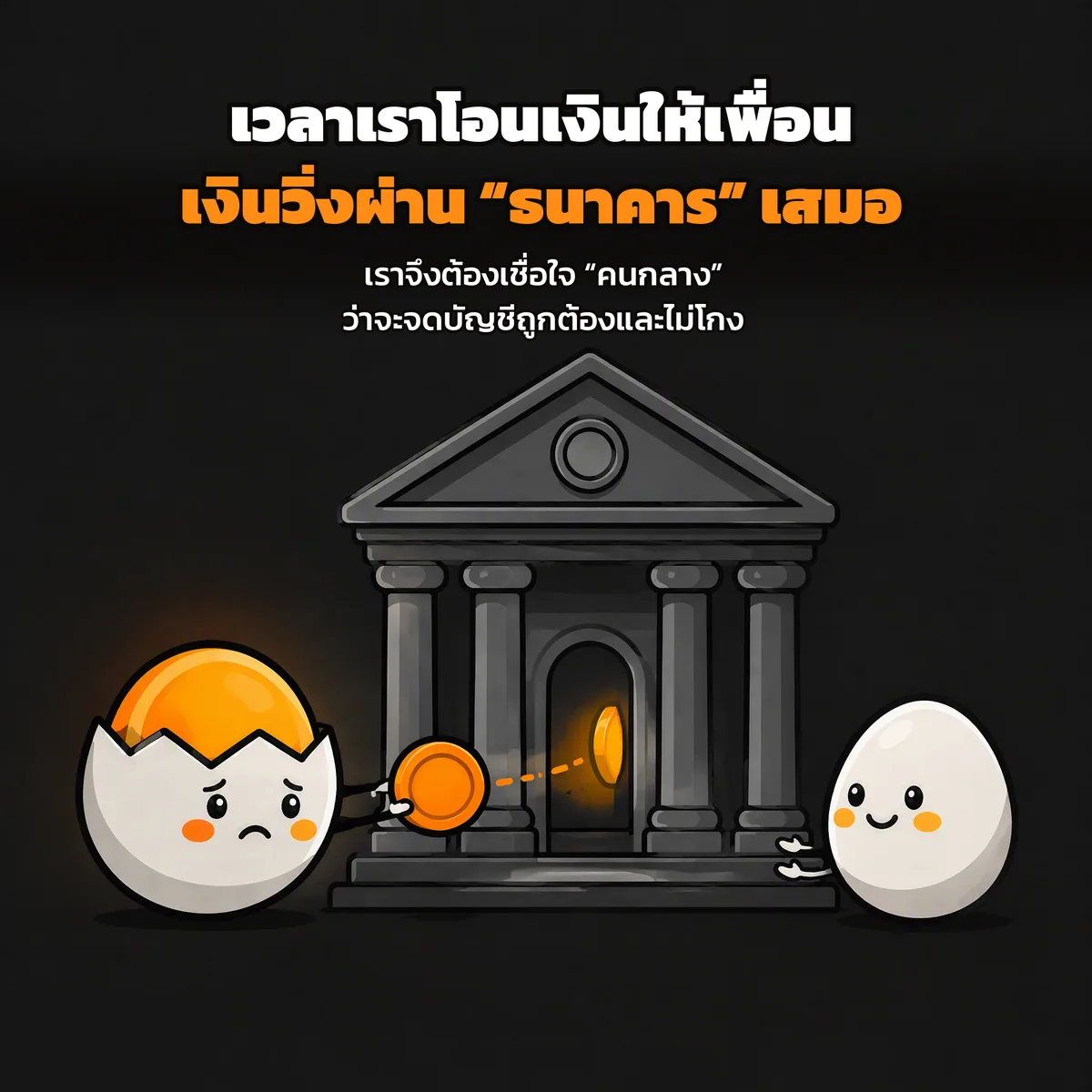
Let’s start with a familiar picture… Whenever we transfer money to a friend, the money always passes through a “Bank”. The bank acts as an intermediary, keeping track of balance records, who has how much, and who transferred to whom. We must “trust” the bank to keep accurate records, not cheat, and not lock our account without reason.
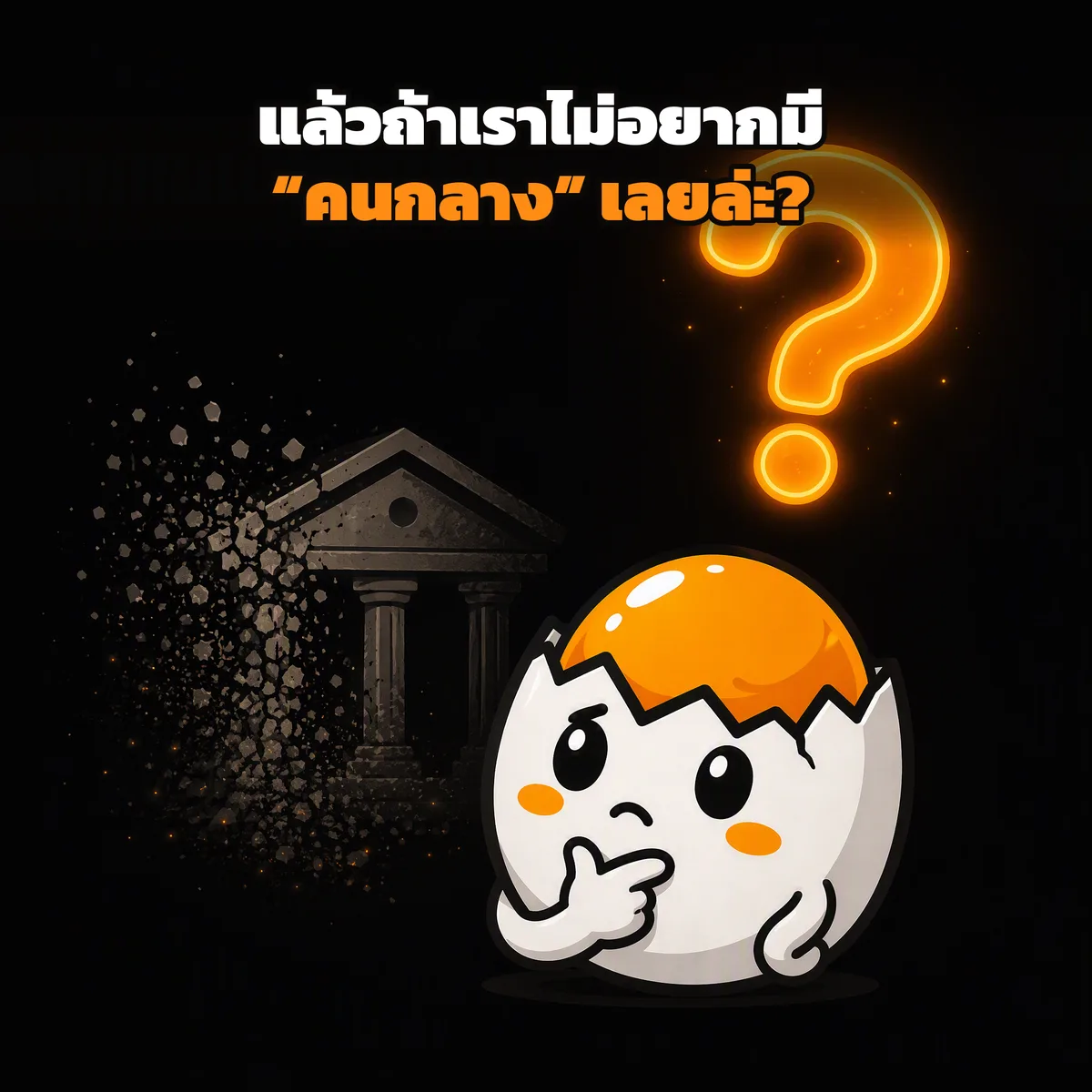
💡 What if we don’t want an intermediary at all?
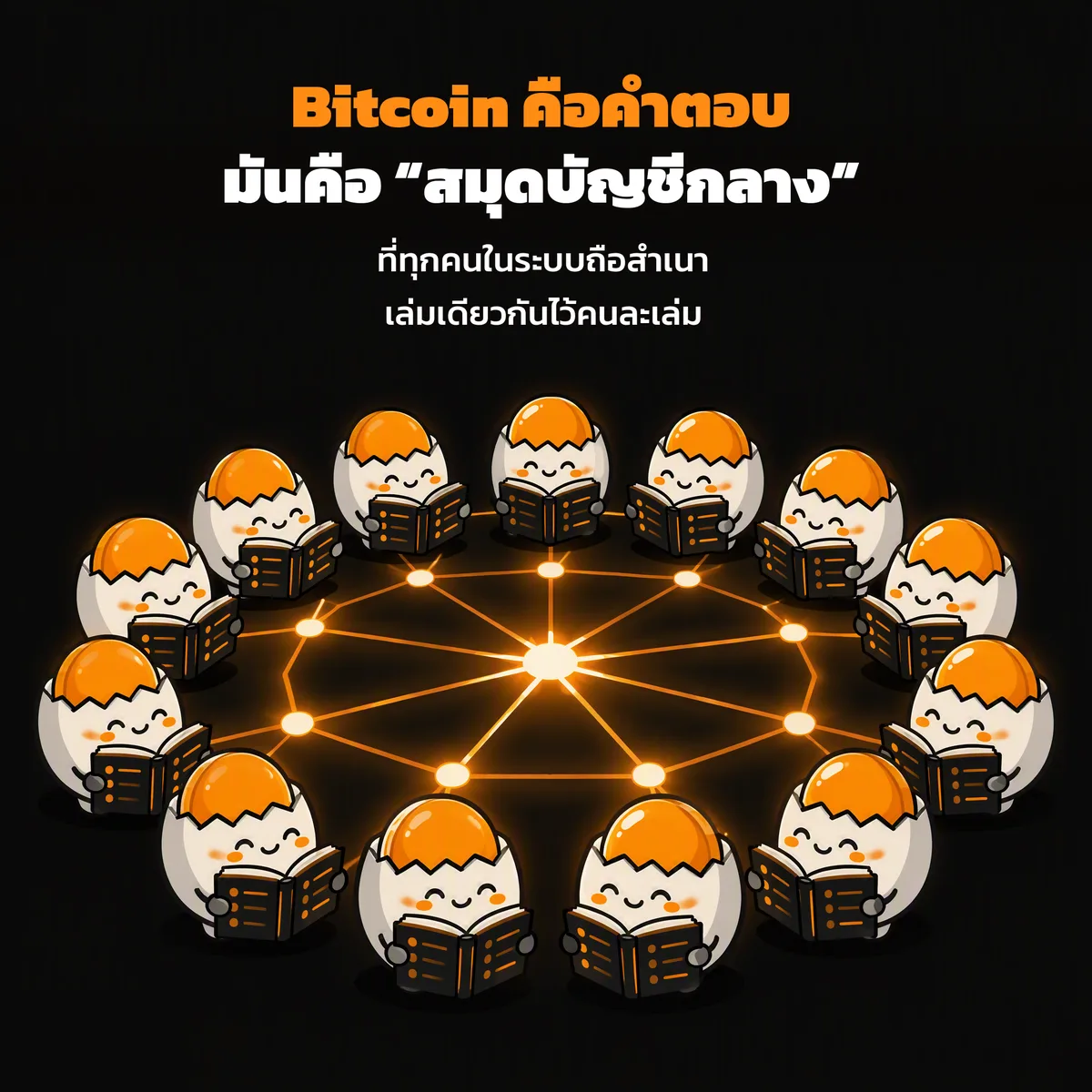
Bitcoin is the answer to that question. It is computer software operating as a “shared ledger”. But instead of a single bank holding the ledger… every participant in the system holds an identical copy of the ledger.
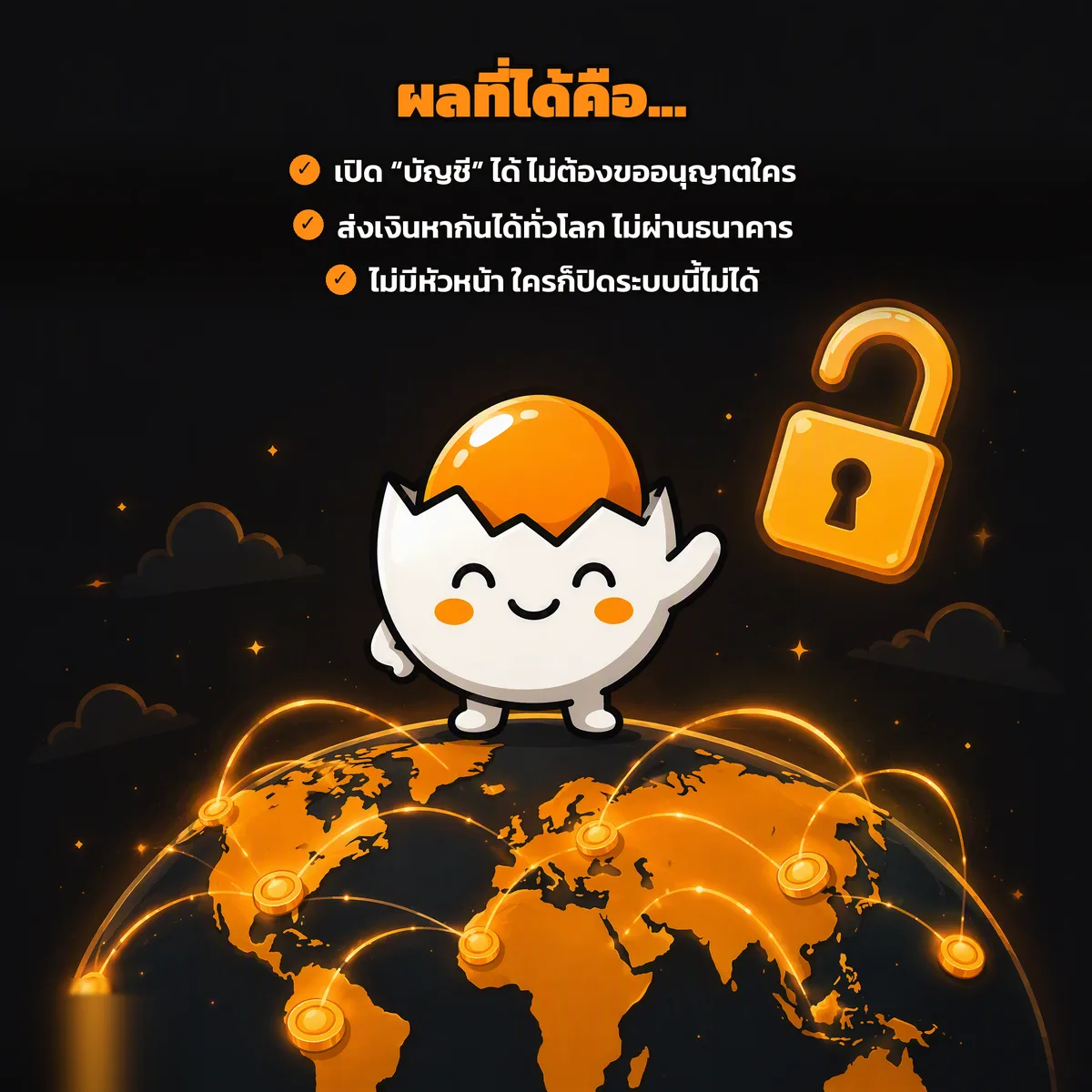
The results:
- Anyone can open an “account” without asking for permission.
- Send money globally without going through banks.
- No leader, no corporate control, and nobody can shut down the system.
📖 Analogy
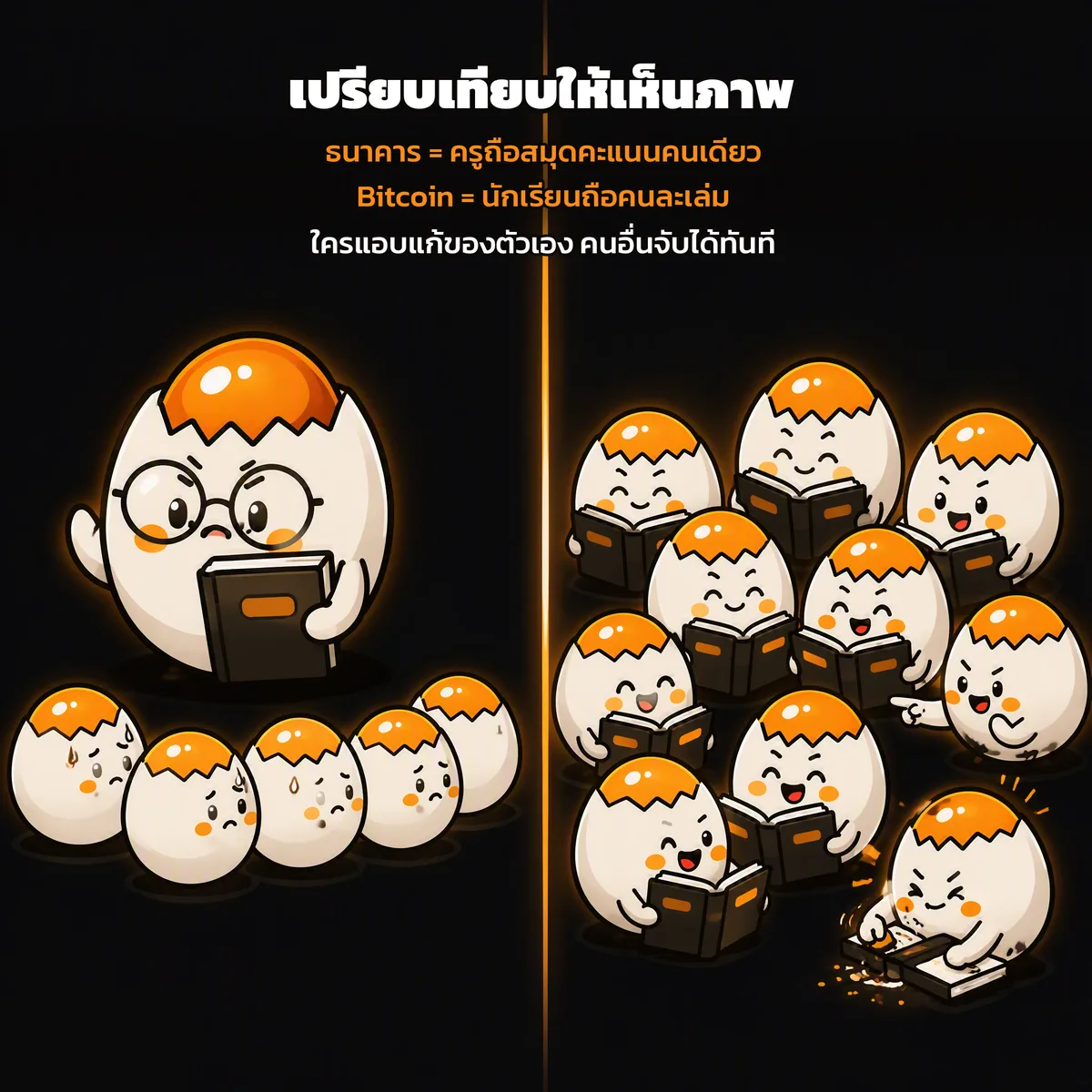
Bank = A teacher holding the single grade book; all students must trust the teacher unconditionally.
Bitcoin = Every student holds their own copy of the grade book and constantly cross-checks. If anyone tries to secretly alter their grades, others catch it immediately because it doesn’t match the rest.
🪙 Brief Origins
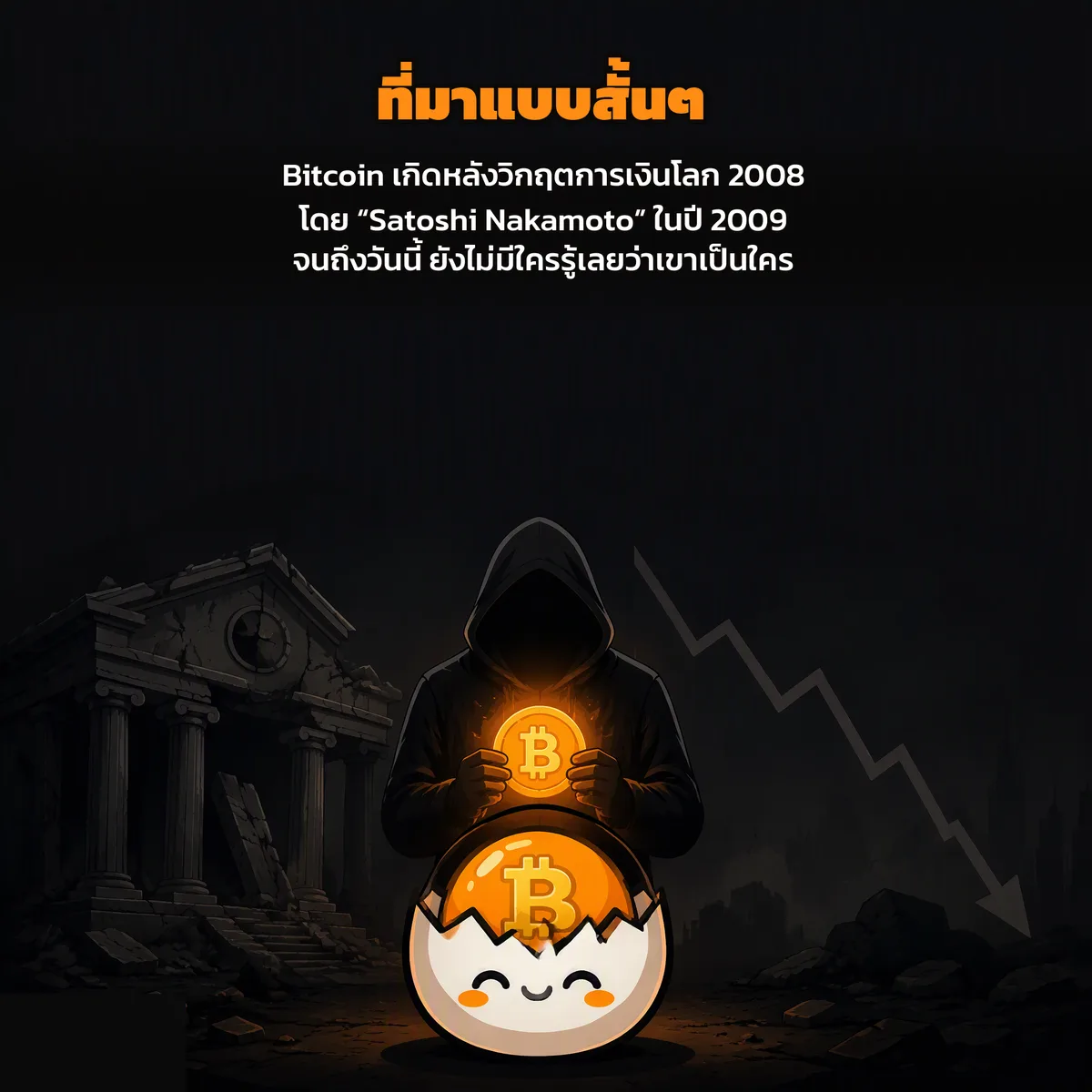
Bitcoin was born after the 2008 global financial crisis, when many lost money as giant banks collapsed. An anonymous person (or group) named “Satoshi Nakamoto” launched this system in early 2009. To this day, nobody knows who Satoshi really is. 🤫
🧠 Today's Key Takeaway
- Bitcoin is a "shared ledger" where every participant holds a copy without bank control.
- No boss, no central company—anyone can open an account and transfer money worldwide.