
In Episode 20, we learned how digital signatures prove ownership inside every transaction.
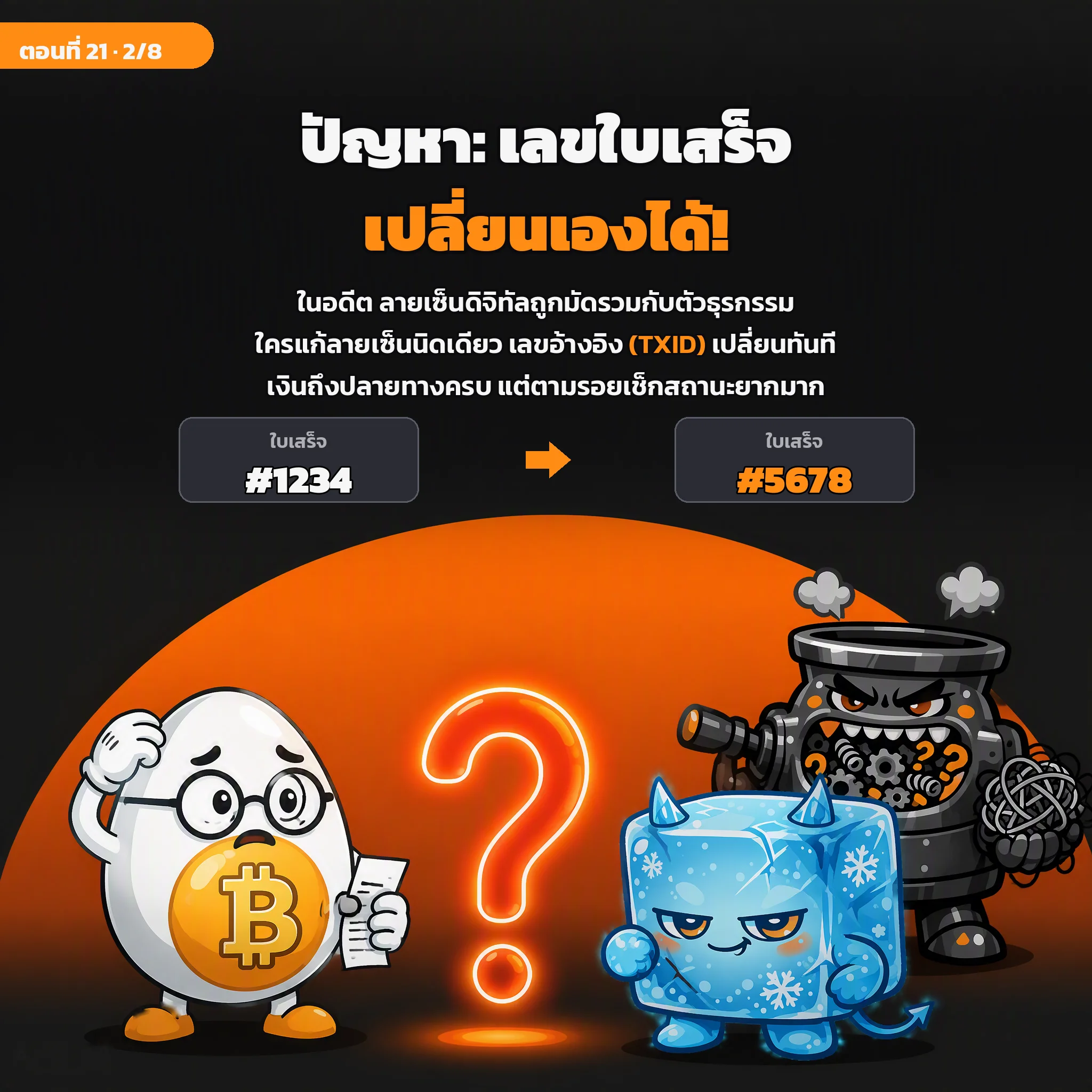
However, signatures take up significant block space and historically caused transaction identifiers to change unintentionally.
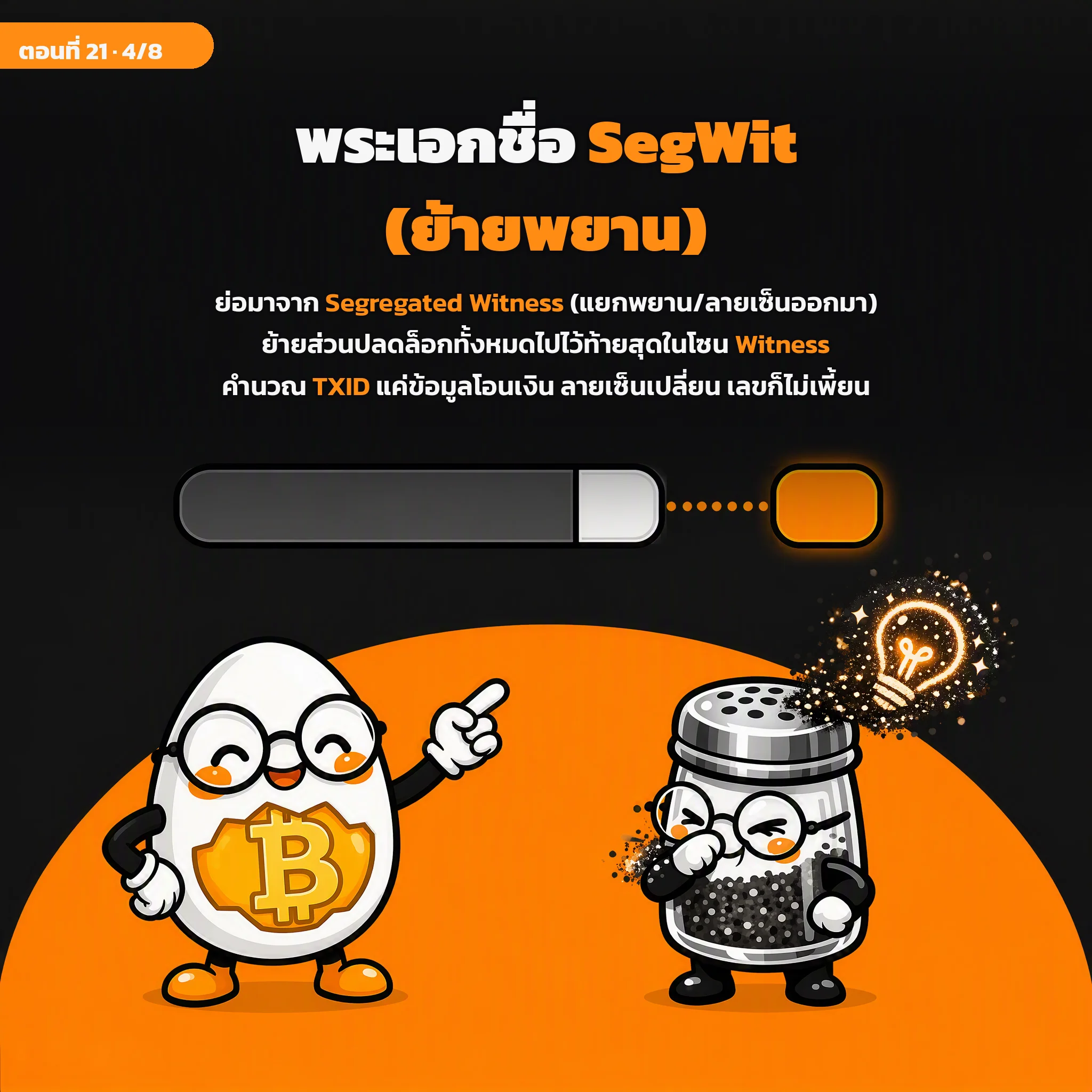
Enter SegWit (Segregated Witness): one of the most important upgrades in Bitcoin history.
🧾 Transaction Malleability Fixed
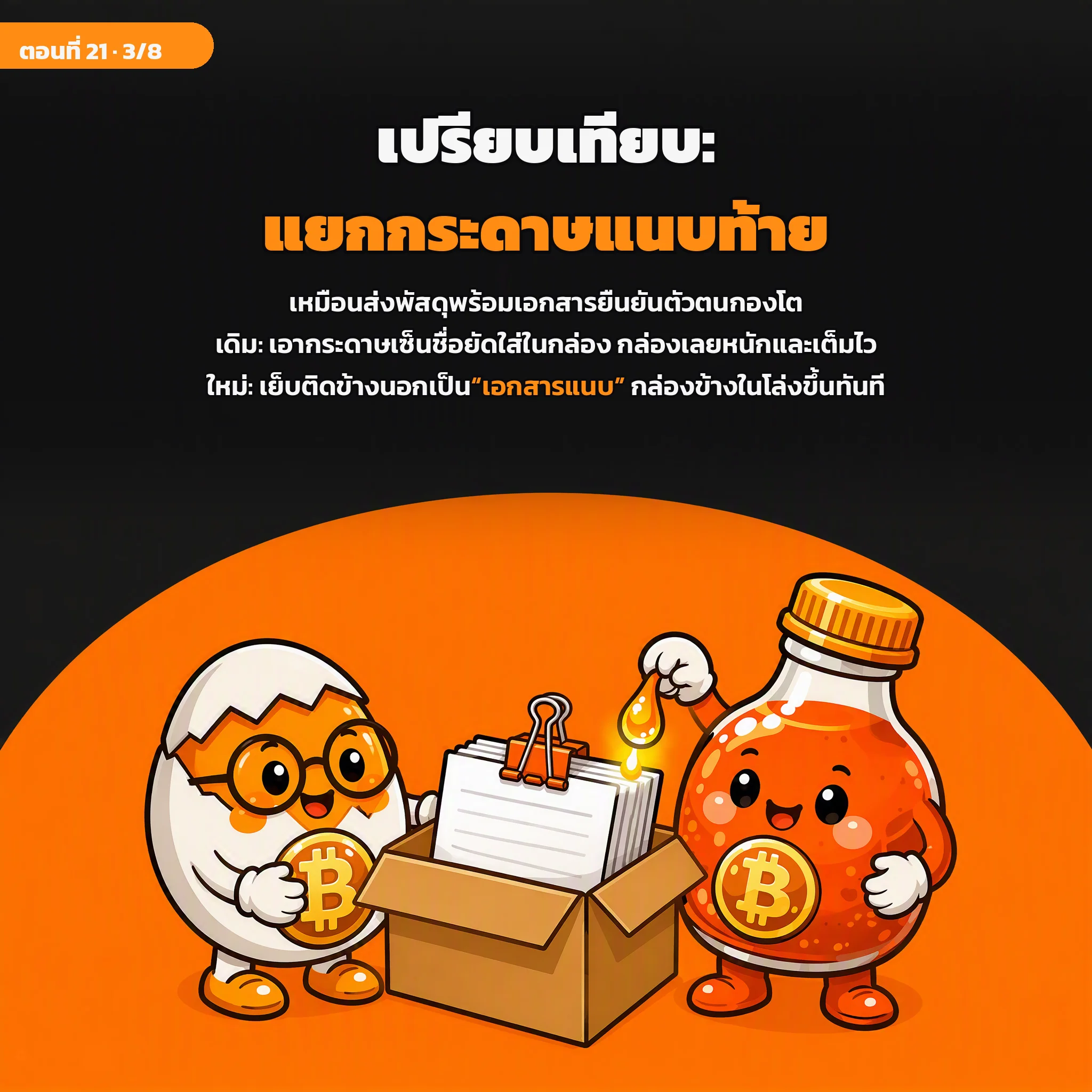
Historically, TXIDs were calculated by hashing the entire transaction, including signatures. Because signatures could be mathematically malleated without invalidating them, the TXID could change in transit. SegWit separates the signature (Witness) from the TXID calculation, locking down the ID permanently.
📦 Block Weight & 75% Discount
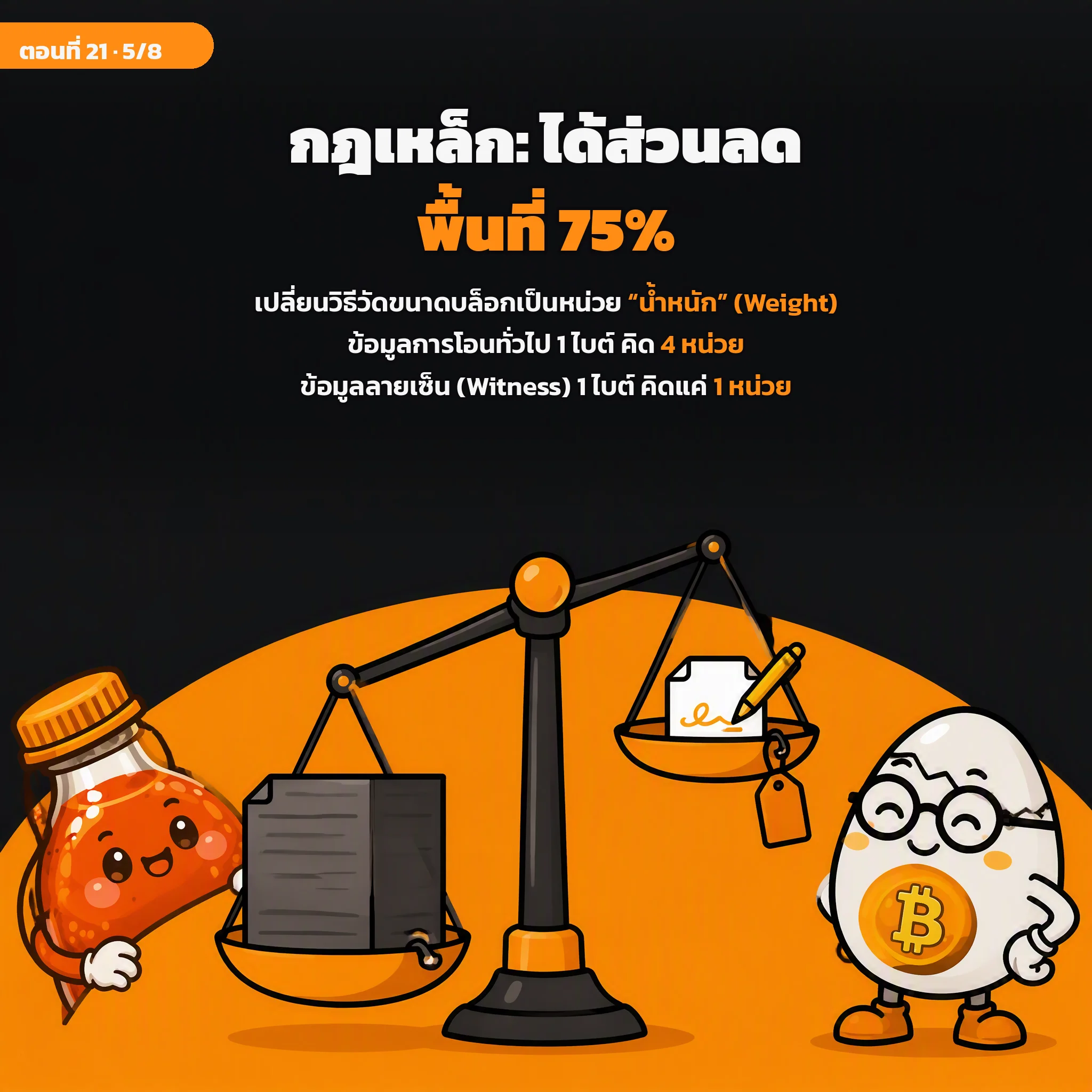
SegWit introduced Block Weight (maximum 4,000,000 weight units). Base data counts as 4 units/byte, while Witness data counts as only 1 unit/byte (a 75% discount!). This effectively expands block capacity to ~1.8 MB without a risky hard fork.
🛡️ Soft Fork Upgrade
SegWit was deployed as a backward-compatible Soft Fork activated via 95% miner signaling on August 24, 2017 (block 481,824). Older nodes still see valid transactions without breaking consensus.
🧠 Today's Key Takeaway
- SegWit (Segregated Witness) moves signatures outside the base transaction into a witness structure.
- Eliminates Transaction Malleability by excluding witness data from TXID calculation.
- Increases effective capacity to ~1.8 MB with a 75% discount on witness data weight.
- Activated as a seamless Soft Fork in August 2017.
🔮 Next Episode:
Now that we have covered the foundational mechanics of Bitcoin, we transition to practical usage!
Next up: Bitcoin Wallets — how they work, different types, and which one is right for beginners.